Putting in a new driveway, or sealing a bigger area? Two of the most popular choices in Queensland are spray seal and asphalt. People mix them up, because both use bitumen, both give you a sealed all-weather surface, and both come from the same kind of contractor. They are built differently though, they cost differently, and they suit different jobs.
This guide walks through the spray seal vs asphalt decision in plain terms: how each one works, how they compare on cost, how they hold up over time, and how to pick the right one for your place.
What is spray seal?
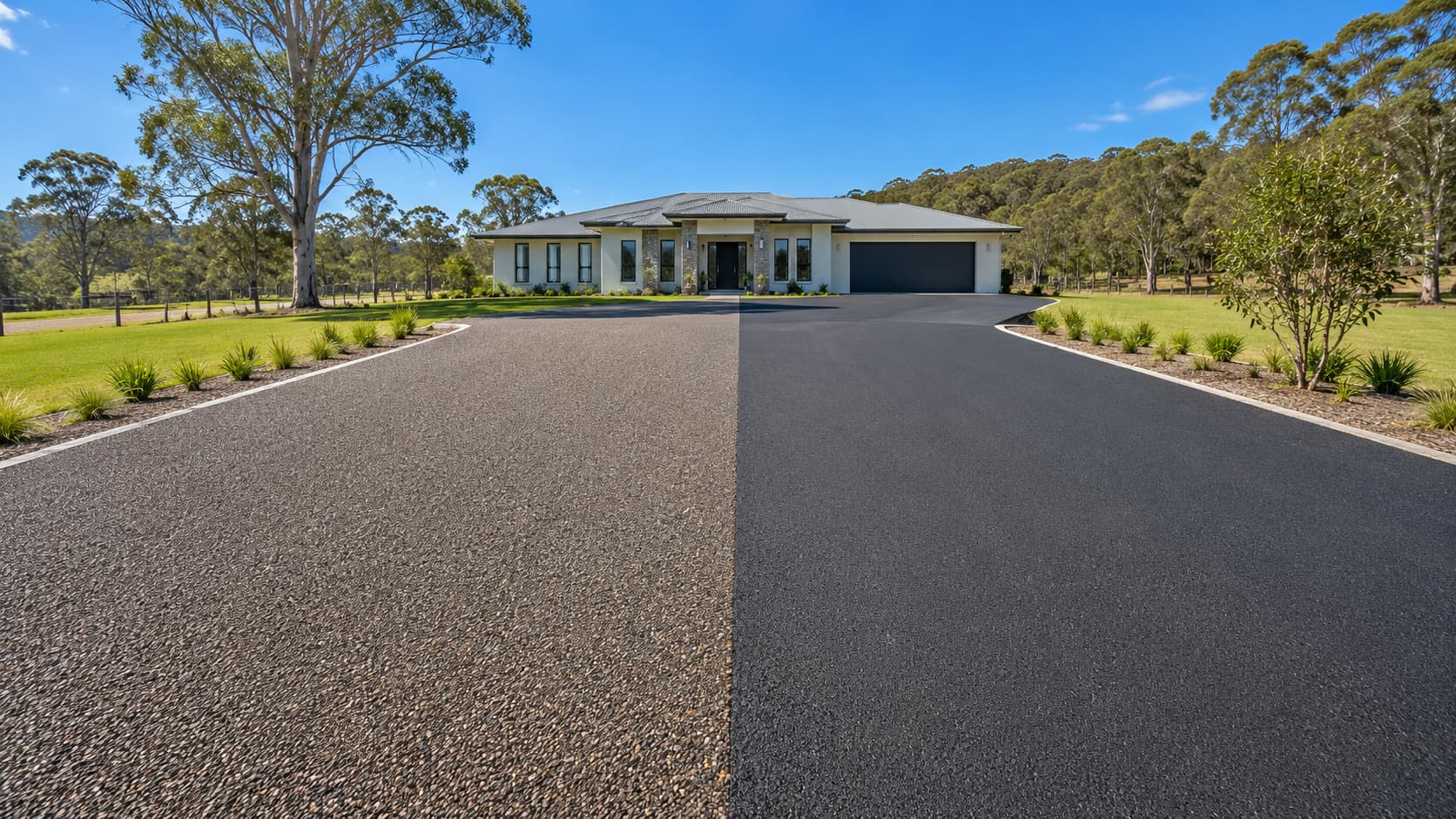
Spray seal (also called bitumen spray seal, chip seal, or tar and chip) is made by spraying hot bitumen binder straight onto a prepared base, then spreading aggregate, the small stones, over the top and rolling it in. The bitumen holds the stones in place, and the stone is the bit you actually drive on.
It is a thinner, quicker way to surface an area, and it has been used on rural roads and long driveways for decades. The finish has a textured, chip-stone look rather than a smooth black one.
What is asphalt?
Asphalt is pre-mixed. The aggregate and bitumen are combined at a plant, delivered hot, laid in an even layer, and compacted with a roller. You end up with the smooth, dense black surface most people picture on a home driveway or car park.
Because it is mixed to a set recipe and laid as a solid layer, asphalt is stronger and smoother than spray seal. For a closer look at the material, our guide on what asphalt is covers it, and our post on the difference between bitumen and asphalt clears up a common mix-up.
Spray seal vs asphalt at a glance
| Feature | Spray seal | Asphalt |
|---|---|---|
| Upfront cost | Lower | Higher |
| Finish | Textured, chip-stone | Smooth, dense black |
| Strength / load | Good for lighter, slower traffic | Stronger, handles heavier loads |
| Best for | Long rural driveways, large areas, access roads | Residential driveways, car parks, high-use areas |
| Loose stone | Some, especially early on | Minimal |
| Lifespan | Shorter, with periodic resealing | Longer with maintenance |
Cost: why spray seal is cheaper upfront
For most people the big difference is price. Spray seal uses less material and goes down faster, so the upfront cost per square metre is usually lower than asphalt. The bigger the area, the wider that gap gets, which is why a spray seal driveway is so popular for long, rural blocks and access roads where asphalt would be expensive to run end to end.
Asphalt costs more upfront, because there is more material in the surface and the process takes more work. What you get back is a stronger, smoother surface that lasts longer and usually needs less attention.
The sensible way to compare them is over the whole life of the surface, not just day one. A cheaper surface that needs resealing sooner can close the gap over time. For pricing context, see our guides on bitumen cost per square metre and how much a bitumen driveway costs, and get a site-specific quote either way, because area, base condition, and access all change the number.
Durability and maintenance
Asphalt is the tougher surface. Over a sound base, with the odd crack seal and reseal, it copes with heavy, frequent traffic, which is why it is the default for home driveways and car parks.
Spray seal does very well in the right spot, particularly lighter traffic at lower speeds. It will want resealing now and then to stay watertight, and you can expect a bit of loose stone in the first few weeks until it beds in. On a long rural driveway, that trade-off is usually worth the saving.
Appearance and feel
This part comes down to taste. Spray seal has a natural, textured, stony finish that plenty of rural and acreage owners actually prefer, and the exposed stone grips well. Asphalt has a clean, uniform black look that suits suburban homes and commercial frontages, and it is easier to sweep, clean, and mark out for parking.
Which should you choose?
Use this as a rough guide.
Spray seal is usually the better fit when:
- you are surfacing a long spray seal driveway, an access road, or a large rural area
- budget is the priority and the traffic is lighter and slower
- you are happy with a textured, natural finish
Asphalt is usually the better fit when:
- it is a residential driveway, a car park, or another high-use surface
- you want a smooth finish and almost no loose stone
- durability and a clean look matter more to you than the lowest upfront price
Plenty of properties end up using both: asphalt at the house and entrance where it gets seen and used most, spray seal along a long approach where the cost per metre really counts. A good contractor will weigh up your site, your traffic, and your budget, then tell you the right mix.
Frequently asked questions
- Is spray seal the same as asphalt? No. Spray seal is bitumen sprayed onto the base with stone rolled into it. Asphalt is a pre-mixed material laid as a solid, compacted layer. Asphalt is smoother and stronger, spray seal is cheaper and faster to lay over a big area.
- Is spray seal cheaper than asphalt? Usually, yes. Spray seal has a lower upfront cost per square metre, and the saving grows with the size of the area. Asphalt costs more at the start but tends to last longer and need less maintenance, so it pays to compare them over the life of the surface.
- How long does spray seal last? With a sound base and the odd reseal, spray seal can give you many years of service, especially under lighter traffic. Resealing when it needs it is the key to keeping water out and stretching its life.
- Can you put asphalt over spray seal? Often, yes. A sound spray seal surface can act as a base for an asphalt overlay, but it depends on the condition of the existing surface and base. A site inspection is the only way to know for sure.
Not sure which surface suits your property? Road Tek Bitumen lays both spray seal driveways and asphalt driveways across Brisbane and Central Queensland. Get a free measure and quote and we will recommend the best fit for your site and budget.