Good asphalt driveway drainage starts before the asphalt arrives. The finished surface needs to guide water to an appropriate collection point, the drainage system needs somewhere suitable to discharge, and the pavement underneath needs reliable support. Adding a drain after paving will not necessarily solve a problem caused by incorrect levels.
For Brisbane homeowners, a useful starting point is to look at the whole route from the street to the garage, then consider the water arriving from gardens, roofs and higher ground. This guide explains the decisions to discuss before building or resurfacing an asphalt driveway.
Why water matters below the surface
A puddle is easy to see. Moisture affecting the layers underneath is less obvious. Water entering through damaged areas or collecting beside a pavement can contribute to weakening, deformation and potholes. Queensland Transport and Main Roads emphasises that moisture-related distress needs its cause addressed when selecting a rehabilitation treatment. See its Pavement Rehabilitation Manual.
For a driveway, that means a recurring wet patch deserves investigation before it is covered. Ask whether the problem is a blocked inlet, an uneven surface, water entering from the side, or movement in the supporting layers. Each can lead to a different scope of work.
Start with a wet-weather observation
When conditions are safe, take photographs during and after ordinary rainfall. You do not need to measure a storm or enter floodwater. A few photographs from the house can give the contractor useful context that a dry-day inspection might miss.
- Mark where water first enters the driveway.
- Photograph puddles and note whether they remain after surrounding areas have dried.
- Show the garage threshold, driveway edges and any existing grates.
- Point out water coming from a downpipe or adjoining landscaped area.
- Mention recent changes, such as a new shed, garden bed or widened parking area.
Keep these observations with your quote request. They help explain the problem without assuming that a particular drain or surface treatment is already the answer.
Surface falls and drains must work together
The surface shape determines where runoff travels. A collection drain can only intercept water that reaches it. A low area elsewhere, or an edge that holds water against the pavement, may need a change in levels as well as drainage work.
Discuss the driveway as a sequence of connected levels: the street connection, property boundary, parking area, garage and any paths. Ask how the proposed finish will meet each one. A resurfacing layer adds height, so these junctions deserve another check even when the existing driveway looks reasonably flat.
For a sloping site, ask the contractor to explain both the intended water path and the vehicle path. The solution needs to account for access and transitions as well as drainage. There is no single fall that can be prescribed from a photograph for every Brisbane property.
What drainage options might be considered?
These are discussion points for a site assessment, rather than a shopping list:
- Surface reshaping: correcting local depressions or the broader driveway profile where levels allow.
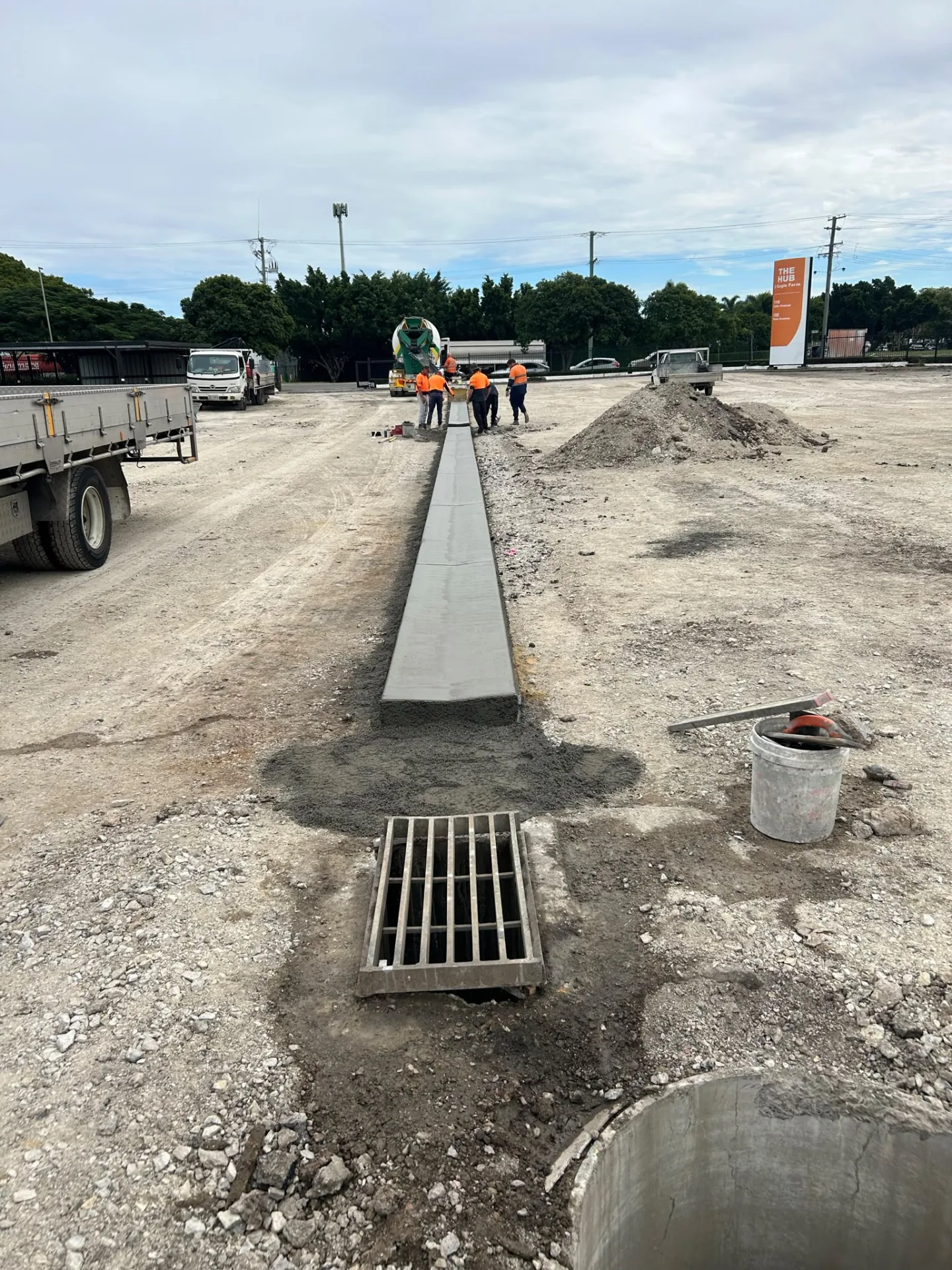
- Channel drains or grated pits: collecting surface runoff at a designed location, with a suitable downstream connection.
- Edge drainage: managing water alongside the pavement instead of leaving it trapped against the base.
- Subsurface drainage: considering water beneath the pavement where an investigation identifies that problem.
The appropriate combination depends on the site. Ask who is responsible for the drainage design and connection work, and whether another appropriately qualified contractor or designer is needed. A paving quote should make those boundaries clear.
Check the outlet before choosing the drain
A grate is only the visible beginning of a drainage system. Before agreeing to install one, establish where the water goes and how the connection will be assessed. Brisbane City Council says property owners must maintain private stormwater infrastructure and direct runoff to a system connected to a lawful point of discharge. Its stormwater guidance explains these responsibilities.
Do not assume that a convenient low point, a neighbouring property or an existing pipe is an acceptable outlet. Have the proposed arrangement checked for your site. If the project involves connecting to Council drainage or moving a pit, Council identifies additional permissions on its driveway permit page. Requirements outside Brisbane City Council’s area should be checked with the relevant council.
What should the quote explain?
Ask for enough detail to compare the proposed result, not just the total paved area. A useful scope should identify:
- The existing drainage concern and any investigation still required.
- The intended finished levels and how they meet buildings and adjoining surfaces.
- Any excavation, base repair or reshaping included in the price.
- The proposed collection points and responsibility for outlets or connections.
- Any approvals, design work or specialist trades included or excluded.
- How access will be managed and what will be checked at handover.
Our driveway preparation guide explains the broader groundwork. If the surface is already damaged, start with an asphalt driveway repair assessment so the drainage concern and pavement condition can be considered together.
Common driveway drainage questions
Will a fresh layer of asphalt remove puddles?
Only if the proposed works actually correct the cause and provide a workable drainage path. Ask how the new levels will change water movement; a new finish alone is not an explanation.
Can the driveway be assessed in dry weather?
Yes, but bring photographs and a description of what happens when it rains. Explain when the problem began and whether earlier repairs changed it.
What should I check after completion?
Ask for a handover explanation of the drainage arrangement, cleaning access and maintenance responsibilities. Keep grates accessible and report unexpected ponding or movement promptly. Our asphalt maintenance guide covers ongoing care.
Planning the rest of the pavement? Read our guides to asphalt driveway thickness and laying asphalt over existing concrete before comparing your options.
Discuss your Brisbane driveway
RTB Civil provides asphalt paving and repairs across Brisbane and surrounding South East Queensland areas. Request a free site quote with your suburb, approximate area and photographs of the drainage concern, or call 0423 783 556. We can discuss the paving scope and the next steps for assessing your site.