There is no single asphalt driveway thickness that suits every Brisbane property. The appropriate pavement depends on the ground, the supporting base, vehicle use and the mix being installed. The number in a quote should also describe the finished, compacted asphalt depth, rather than the loose material before rolling.
Another important distinction is where the work sits. Paving inside your property and the vehicle crossing over the verge can have different requirements. A generic driveway recommendation should never replace the applicable crossover detail or a site-specific pavement design.
Understand the layers you are paying for
A driveway is a pavement system, with a visible surface and supporting material underneath. In an asphalt-over-granular-base arrangement, the main components are:
- Subgrade: the prepared ground supporting the pavement.
- Base and any subbase: engineered supporting layers whose material and depth should be specified.
- Asphalt: the compacted surfacing, sometimes placed in more than one layer depending on the design.
Some pavements use a different arrangement, including full-depth asphalt construction. Ask which system is proposed. Two quotes that mention the same asphalt thickness may include very different work below it.
The National Asphalt Pavement Association’s base preparation guidance explains the importance of suitable support, moisture condition and compaction before paving. For a homeowner-friendly overview of the sitework, read our asphalt driveway preparation guide.
Compacted thickness versus loose thickness
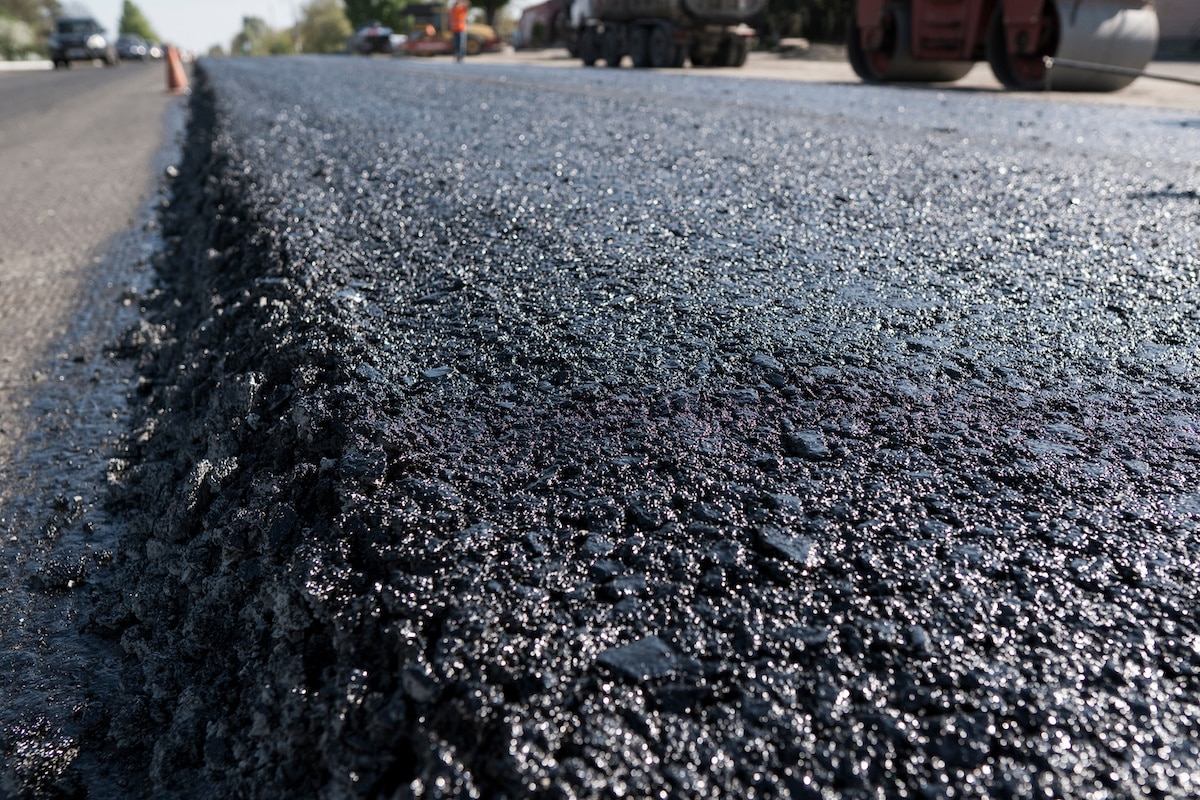
Asphalt consolidates when it is rolled. The material has to be placed at a greater loose depth to achieve the specified final thickness. The relationship depends on the mixture and construction process, as explained in the Asphalt Paving Handbook’s layer thickness guidance.
For example, if a design calls for 50 mm of compacted asphalt, the instruction is not simply to spread 50 mm of loose mix. That figure is an illustration of the terminology, not a recommendation for your driveway. Ask the contractor to state the compacted depth explicitly and explain how it will be checked.
A useful clarification is: “Does this depth apply to the finished asphalt only, and is it the compacted thickness?” That question avoids confusing the surfacing with the combined depth of excavation, road base and asphalt.
Vehicle use needs more detail than “residential”
Tell the contractor what will actually use the driveway. A home may have a small car today and need access for a motorhome, delivery truck or building works later. Discuss those expectations before the pavement is specified.
Prepare a short vehicle list covering everyday traffic, occasional heavier vehicles, where they will turn and where they will stand. Mention trailers and any concentrated support points that need separate consideration. A photograph of the parking arrangement can be useful, particularly around tight turns or a narrow entrance.
If the intended use is commercial, provide operating information as well: vehicle types, frequency, delivery routes and loading areas. Our asphalt car park service is the relevant starting point for a commercial paving enquiry. Do not transfer a domestic driveway specification to a working yard without assessment.
Why a thicker surface cannot answer every problem
Adding asphalt is not a substitute for understanding soft ground or an unsuitable base. The supporting layers must be assessed and corrected where needed before surfacing. A quotation that only increases the black layer leaves an important question unanswered: what will support it?
Drainage belongs in the same discussion. Ask where surface runoff will go and whether there is evidence of water affecting the pavement underneath. Our Brisbane driveway drainage guide lists the observations to bring to a site assessment.
Where the proposed solution differs between contractors, ask each to explain the reason. One may have allowed for removing unsuitable material or replacing a failed area that another has assumed can remain. Compare those assumptions before comparing totals.
Check Brisbane crossover requirements separately
Brisbane City Council’s published driveway technical standards list specific material requirements for vehicle crossings. The asphalt section states that asphalt is permitted in non-urban areas only and specifies at least 100 mm of asphalt cover over at least 50 mm of compacted road base.
These are Council requirements to check in the context of the crossing and relevant approval. They are not a universal design for every private parking area or driveway behind the boundary. Confirm the applicable drawing, permitted material and approval conditions with Council before committing to crossover work. Other South East Queensland councils can have different requirements.
Ask about the mix and the number of layers
The asphalt mix and the depth of each paving layer need to work together. A very thin layer is not interchangeable with any available mix, and a thicker pavement may involve multiple lifts. Ask the contractor to identify the proposed mix, compacted layer depths and any bonding treatment between layers.
The Asphalt Paving Handbook discusses the relationship between mix size and compacted lift thickness. It is construction guidance, not a Brisbane residential design schedule; the project specification must still suit the actual site.
A checklist for comparing driveway quotes
- Use: Does each quote allow for the same vehicles and access requirements?
- Preparation: What will be excavated, retained or repaired?
- Supporting layers: Are the material, compacted depth and treatment of soft areas clear?
- Asphalt: Are the mix and finished compacted thickness stated?
- Levels: How will the surface meet the garage, drains, paths and crossover?
- Allowances: What happens if inspection or excavation reveals unexpected conditions?
- Handover: What records and advice will you receive, including when the driveway can be used?
Keep the agreed scope with your quote. It gives both parties a clearer reference than a verbal promise of a “heavy-duty” or “standard” driveway.
If you are retaining an existing concrete driveway, our guide to asphalt overlays over concrete explains the slab-condition and level checks to discuss first.
Get a specification suited to your property
RTB Civil provides asphalt driveway paving in Brisbane and surrounding areas. Request a free site quote with your suburb, approximate area, existing surface and expected vehicles. The aim is a clearly defined pavement scope, with the preparation and surfacing considered together.